
From the Sensex firms, Infosys, Tata Consultancy Services, HCL Tech, Tech Mahindra, Tata Motors, Sun Pharma, Maruti and Titan were among the major gainers. Bharat Electronics, Asian Paints, Bharti Airtel and ICICI Bank were among the laggards.

In six trading sessions to Friday the market capitalisation of BSE-listed companies saw a massive decline of Rs 11,76,985.88 lakh crore. All Sensex components were trading in the red, led by losses in Tata Steel, Tech Mahindra, Infosys, Mahindra and Mahindra, Bajaj Finance, HCL Tech and Reliance Industries.

Equity benchmark indices Sensex and Nifty experienced a significant decline, primarily driven by a selloff in IT stocks due to concerns about AI disruption and renewed worries over global trade.

The decision to hike US H-1B visa application fee to $100,000, trade talks and the GST rate cut will be the key drivers for stock market movement this week, analysts said.

'Oil is still well below its all-time highs, and the world is gradually running out of known reserves.'

Stock markets are likely to trade in a range-bound manner in a holiday-shortened week where trading activity of foreign investors, currency movement and global macroeconomic data announcements are expected to drive sentiments, analysts said. Several global markets may see subdued activity on account of Christmas and New Year holidays, an expert said.

Equity benchmark indices Sensex and Nifty advanced for the third straight session on Tuesday driven by firm global cues and optimism over India-US trade agreement, even as investors turned to profit-booking at higher levels.

From a modest salary to Rs 1 crore, here's Ramalingam Kalirajan's smart compounding blueprint for young earners
Benchmark indices tumbled about 2 per cent on Friday, capping one of the most turbulent weeks for domestic equities as investors fretted that the West Asian conflict could drag on for weeks or even months.

Net inflows into equity mutual fund (MF) schemes scaled a record high in July as the market correction and a raft of new fund offerings (NFOs) lifted lump-sum collections. Active equity schemes raked in a net Rs 42,702 crore in July, going past the previous high of Rs 41,156 crore in December 2024. Systematic investment plan (SIP) inflows continued to scale new highs, rising over 4 per cent month-on-month (M-o-M) to Rs 28,464 crore.

A combination of fewer listings and falling 'average daily traded value' contributed to the drag in Q3.
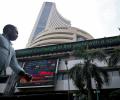
Benchmark stock indices Sensex and Nifty closed on a flat note in a choppy session on Wednesday as gains in PSU banks and auto shares were offset by losses in IT stocks.

Benchmark equity indices Sensex and Nifty tumbled more than 1 per cent on Friday due to across-the-board selloff, especially in metal, IT and commodity stocks, tracking sluggish global markets.

Richest Indian Gautam Adani and mining baron Anil Agarwal on Sunday led India Inc in paying tributes to veteran stock market investor Rakesh Jhunjhunwala, who passed away early Sunday morning. "Extremely saddened by the untimely passing away of the most legendary investor that India has had. "Shri Jhunjhunwala inspired an entire generation to believe in our equity markets with his brilliant views.

Domestic mutual funds have infused the highest ever -- Rs 4.84 trillion -- this year amid strong inflows via SIPs.

Share of IPOs opening above issue price drops to 64.6%, median gains shrink sharply amid market volatility.

There are hopes of a turnaround in overall corporate earnings after six quarters of single digit growth.

The 12.5 per cent EM outperformance this year is surprising. As any market strategist will tell you -- in times of stress when safe haven trades are in fashion, emerging markets typically fall faster than developed ones as investors switch out of what they deem to be riskier assets.

Benchmark equity indices Sensex and Nifty extended their gains for the third straight session on Wednesday, driven by last-hour buying in bank, metal, and FMCG shares.

Continuing their massive selling spree for the ninth consecutive month, foreign investors dumped Indian shares worth Rs 50,203 crore in June -- the highest net outflow in over two years -- amid aggressive rate hike by the US Federal Reserve, elevated inflation and relatively higher valuation of domestic equities. Foreign portfolio investors (FPIs) have now pulled out around Rs 2.2 lakh crore from domestic equities in the first six months of 2022 -- the highest-ever net withdrawal by them. Before that, FPIs withdrew Rs 52,987 crore in the entire 2008, data with depositories showed.

We will explore some of the reasons why a stock-only portfolio may no longer be sufficient and some of the modern alternatives and strategies that can help investors build resilient and profitable portfolios.

Stock markets rebounded on Friday with the benchmark Sensex closing higher by 316 points after heavy buying in banking and metal shares amid optimism over trade deal progresses and India's participation in Pax Silica.

Stock markets will be driven by inflation data, trade-related news, earnings and trading activity of foreign investors in a holiday-shortened week, analysts said on Sunday. Global market trends will also influence trading sentiment this week, they added.

Capex, infrastructure development, and prudent fiscal management are the key focus areas in the Budget, says Nilesh Shah.
The net inflow into equity mutual funds surged 24 per cent to Rs 23,587 crore in June, reversing the declining trend of the last five months, driven by strong equity market performance across segments, data released by the Association of Mutual Funds in India (AMFI) showed on Wednesday. Also, the latest fund infusion by investors marks the 52nd consecutive month of net inflows into the segment.

Precious metal prices, particularly gold and silver, experienced a significant surge in the national capital as investors sought safe-haven assets amid escalating hostilities in the Middle East.

Equity markets this week will turn their focus on the RBI's interest rate decision, Q1 earnings from several blue-chip firms and tariff-related news for further cues, analysts said. Moreover, trading activity of foreign investors and trends in global equity markets will also drive investors' sentiment.

'The next two to three weeks will not be decided in Washington.' 'They will be decided in Tehran, in whatever calculation Iran makes about the costs of continued resistance against the costs of appearing to have yielded.'

This is the second-worst performance by the pack during this period over the last five years since CY20.
It pointed out that the capital market scenario in 2008 should be seen in the backdrop of heightened uncertainties triggered by the international financial crisis, slowdown in the global economic growth, fluctuations in international food, commodity and fuel prices and volatility in overseas financial markets.
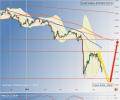
Clearly the DXY is overbought and needs to work off overbought conditions. That will trigger consolidation in US equity markets that are just as overbought, says Sonali Ranade

'If an investor is ready to stay put for the next five years, one can consider investing in mid- and small-cap funds, but through SIPs.'

Domestic equities surged on Tuesday, posting their best single-day gains in more than eight months after a long-awaited trade deal between India and the US. The deal, which lowered tariffs on Indian goods to 18 per cent from 50 per cent, significantly improved investor sentiment and lifted a key overhang for the market.

Tata Consultancy Services, Tech Mahindra, Infosys, HCL Tech, Bharti Airtel, Sun Pharma, Bharat Electronics and Trent were the major gainers among Sensex scrips. However, Maruti, Eternal, Kotak Mahindra Bank and Titan were among the laggards.
Among Sensex firms, Power Grid, Eternal, Bharti Airtel, Axis Bank and Infosys were the biggest laggards. However, Mahindra & Mahindra, Sun Pharma, Kotak Mahindra Bank and State Bank of India were among the major gainers.

Indian corporate are increasingly shifting away from bank funding towards alternative sources, such as equity and bond markets, as their deleveraged balance sheets have improved their ability to raise equity at better valuations. Moreover, the 100 basis points (bps) rate cut by the Reserve Bank of India (RBI) has enabled them to access long-term funds from the debt capital market at cheaper rates.
'If I had to highlight one area that will do well, it is the financial assets -- that is the private sector banks, insurance and mutual funds.'

After three consecutive months of heavy selling, foreign portfolio investors (FPIs) turned net buyers in the first week of February, infusing more than Rs 8,100 crore in Indian equities, aided by improving risk sentiment, along with a trade deal with the US.

Equity benchmarks face a key test as investors weigh consumption revival hopes against tariff pressures and weak earnings. Amidst this, HSBC has outlined tailwinds and risks that could cap gains.

At a time when investors are preferring higher-risk investment products like thematic and small-cap mutual fund (MF) schemes, some fund houses are exploring the possibility of going further down the market-capitalisation (m-cap) ladder to unearth newer investment opportunities. HDFC MF had filed papers with the capital markets regulator - the Securities and Exchange Board of India (Sebi) - earlier this year for an active micro-cap scheme. Some more fund houses are keen on launching such schemes, say industry observers.
 © 2026 Rediff.com - Advertise with us - Disclaimer - Privacy Policy - Sitemap - Feedback - About us - Terms of use - Grievances